White Card vs Construction Induction Card: Are They the Same Thing?
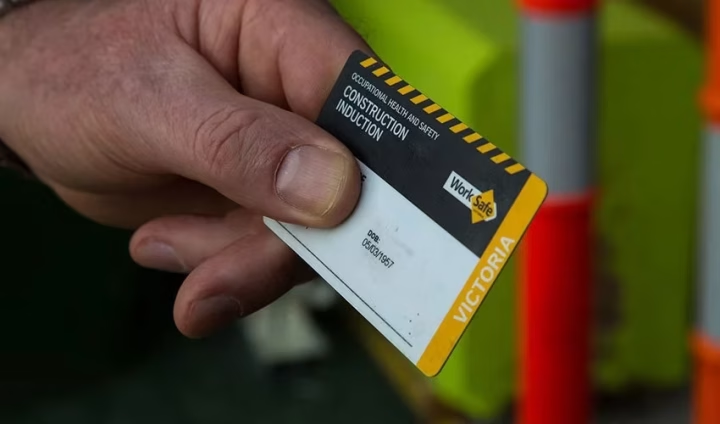
Yes. A White Card and a Construction Induction Card are the same credential wearing two different names. “White Card” is the everyday term you’ll hear on construction sites and throughout the industry, while “Construction Induction Card” (or General Construction Induction Training Card) is the formal term used by regulators and in workplace health and safety requirements. Both terms refer to the card issued after successfully completing CPCWHS1001 Prepare to work safely in the construction industry, the nationally recognised unit that meets Australia’s general construction induction training requirements. Anyone carrying out construction work must complete this training before undertaking construction work.
That said, the terminology can be confusing, especially for people entering the industry for the first time, changing careers, or moving to Australia from overseas. Below, we explain what each term means, why different names are used, and what you need before attending a construction site.
What is a White Card?
A White Card is the construction induction card issued after successfully completing general construction induction training. It is not a builder’s licence or a trade qualification. Instead, it provides evidence that the holder has completed the nationally recognised safety training required to carry out construction work.
General construction induction training covers the fundamentals of working safely in the construction industry, including common site hazards, workplace health and safety responsibilities, risk management principles, hazard control measures, and safety documentation used on construction projects.
After successfully completing the training, workers can apply for or receive a White Card through the relevant state, territory or Commonwealth arrangements. Valid White Cards are generally recognised across Australia.
What is a Construction Induction Card?
“Construction Induction Card” is the formal term commonly used in workplace health and safety legislation and by regulators. You may also see it referred to as a General Construction Induction Training Card. In the construction industry, however, most people simply call it a White Card.
The different names often cause confusion, but they refer to the same credential. After successfully completing general construction induction training, a worker may obtain a general construction induction training card, commonly known as a White Card.
So, if a job advertisement says “must hold a current Construction Induction Card” and another says “White Card required,” they’re asking for the same thing. You don’t need to complete two separate courses or obtain different cards depending on the terminology used.
Is a White Card the same as a Construction Induction Card in every state?
Broadly, yes, but the fine print varies between jurisdictions. Each state and territory WHS regulator, including SafeWork NSW, administers its own version of the training requirement under the national model. The underlying unit of competency is consistent across the country. Administrative arrangements and training requirements may vary between jurisdictions, but a valid White Card is generally recognised throughout Australia.
If you’ve completed your training in one state and plan to work in another, it’s still worth checking the current requirements of the relevant regulator. Most valid White Cards are recognised nationally, but workers should ensure their card remains valid and meets any applicable jurisdictional requirements.
Why is it called a “White Card”?
The term “White Card” comes from the construction induction card issued after completing general construction induction training. While the formal name is General Construction Induction Training Card or Construction Induction Card, “White Card” became the common industry term and remains widely used across Australia.
Historically, some jurisdictions used different coloured cards. Queensland and Western Australia, for example, previously issued Blue Cards before adopting the nationally harmonised White Card system. Despite the formal terminology used by regulators, “White Card” remains the name most workers, employers and training providers use today.
So, when someone asks, “How do I get a White Card?”, they are really asking how to complete general construction induction training and obtain the construction induction card required to carry out construction work.
What does White Card training actually cover?
The course walks through the knowledge every construction worker needs before starting on site. In a typical face-to-face session, expect these areas:
- WHS responsibilities – understanding basic workplace health and safety duties and responsibilities
- Hazard identification – recognising risks like falls, electrical hazards, plant and machinery, and manual handling
- Risk control measures – understanding the hierarchy of controls and how risks can be eliminated, minimised, or managed
- Safe work method statements (SWMS) – understanding the purpose of SWMS and when they are required for high-risk construction work
- Incident and hazard reporting – knowing how to report hazards, incidents, and unsafe conditions in accordance with workplace procedures
White Card Training is designed to help workers recognise risks before they lead to incidents. The focus is not simply on obtaining a card, but on developing an understanding of how hazards arise on construction sites and the practical steps that can be taken to work safely.
Who needs a White Card in Australia?
Anyone carrying out construction work needs to complete the training first. That covers labourers, apprentices, tradespeople, site supervisors, surveyors, and even regular site visitors whose work takes them into an active construction zone. A delivery driver dropping materials at the gate generally doesn’t need one; the same driver helping unload near active machinery does.
Employers carry legal responsibility here too. Letting an un-inducted worker onto a live site is a WHS breach, and regulators do issue penalties for it. Bear in mind the current penalty figures vary by state and change periodically, so for the most up to date penalties we suggest you visit the relevant regulator’s enforcement page.
How do you get a White Card?
You complete the accredited unit CPCWHS1001 Prepare to Work Safely in the Construction Industry, through a Registered Training Organisation authorised to deliver it. If you trained a while back, you might have completed the now superseded CPCCWHS1001A instead. Both are recognised; the newer code simply replaced the old one, no gap in your certification.
Builders Institute (RTO 45904) runs NSW White Card courses and Victorian White Card courses with local trainers who know each state’s specific entry and ID requirements. After you finish the training and pass the short assessment, you’ll get a Statement of Attainment first, followed by your physical or digital card.
Does White Card training differ between states?
Yes, mostly in delivery format and administration, not in content. Here’s a rough comparison:
| State/Territory | Typical delivery | Who administers it |
| New South Wales | Face-to-face classroom, in-person ID check | SafeWork NSW |
| Victoria | Face-to-face classroom | WorkSafe Victoria |
| Queensland | Online or face-to-face training (subject to jurisdictional requirements) | WorkSafe Queensland |
| Western Australia | Online or face-to-face training (subject to jurisdictional requirements) | WorkSafe WA |
NSW and Victoria both lean toward in-person delivery with identity checks done on the day, largely to cut down on card fraud. If you’re weighing up a Victorian course against an NSW one, the content is identical; it’s really about which state you’ll be working in and which regulator’s local requirements apply to you.
Is a White Card valid in every state and territory?
Generally, yes. Valid White Cards (General Construction Induction Training Cards) are recognised throughout Australia under mutual recognition arrangements. In most cases, a worker who completes recognised construction induction training in one state or territory can work on construction sites elsewhere in Australia without needing to repeat the course.
Even so, it is a good idea to keep evidence of your White Card readily available. Many employers and site managers will ask to sight your card before allowing access to a construction site, and some jurisdictions may also provide digital versions that can be displayed on a mobile device.
If you are moving interstate or returning to the construction industry after an extended break, check the current requirements of the relevant regulator to ensure your card remains valid and recognised.
What’s the difference between a White Card and a site induction?
This one causes genuine confusion, so it’s worth being direct about it. A White Card proves you’ve done general industry-wide safety training. A site induction is specific to one job: it covers that site’s emergency exits, hazards, access points and rules. You’ll do a fresh site induction every time you start on a new project, even with a valid White Card already in your pocket.
Is a White Card a construction licence?
No. It’s not a trade licence, a builder’s registration, or a qualification to perform specific technical work. It’s a baseline safety credential. High-risk activities like operating a crane, scaffolding above a certain height, or rigging require a separate High Risk Work Licence (HRWL) on top of your White Card.
Can you work on a construction site without a White Card?
No. If you’re carrying out construction work, you’ll generally need a valid White Card first. Years of experience, overseas qualifications or time spent working on building sites overseas don’t replace the requirement to complete Australian general construction induction training.
It’s a common misunderstanding among migrant workers and people changing careers. Practical experience certainly helps, but before you can legally carry out construction work in Australia, you’ll typically need to complete the required induction training and obtain your White Card.
Does a White Card expire?
Not in the way a driver’s licence does, but there are circumstances where a White Card may cease to be recognised. In some jurisdictions, workers who have not carried out construction work for two consecutive years may be required to complete the training again before returning to the industry.
Since White Card validity requirements are administered by individual state and territory regulators, it’s important to check the rules that apply in your jurisdiction if you’ve been away from construction work for an extended period.
We’ve written a dedicated breakdown on White Card expiry rules if you want the state-by-state detail.
Do you need a White Card refresher course?
Only if you’ve triggered the lapse rule above, or if a specific employer or project requires updated training for their own risk-management reasons. There’s no blanket requirement to refresh every few years just because time has passed.
What happens if you lose your White Card?
You generally don’t need to repeat the whole course. Depending on the state or territory where your card was issued, you may also be able to apply for a replacement card through the relevant regulator or government service. For example, NSW workers can apply for a replacement White Card through Service NSW.
If you’re unsure who issued your card or where you completed your training, contact the relevant state or territory regulator for guidance on the replacement process.
Can employers check a worker’s White Card?
Yes, and they should. Employers are within their rights to ask for evidence of induction training before someone starts, along with any other licences relevant to the role. Good record-keeping protects everyone: the worker, the employer, and anyone else on that site.
Why does construction induction matter?
Construction sites are genuinely unpredictable environments. Conditions change daily, multiple trades work in close proximity, and heavy machinery and mobile equipment such as excavators, cranes, forklifts and earthmoving equipment operate alongside workers on foot. Induction training gives every worker a shared baseline of risk awareness before they enter that environment. It’s not paperwork for its own sake; it’s the difference between a site where everyone understands the hazards and safety requirements and one where people are working with different expectations and levels of awareness.
White Card vs Construction Induction Card: the takeaway
They’re the same credential. If a job posting or a site manager uses one term and you’ve completed the other, you’re covered, there’s no second course to chase. What actually matters is making sure your White Card remains valid and recognised in the jurisdiction where you’ll be working, keeping your card readily available, and checking whether the role or project has any additional requirements, such as a site-specific induction, a High Risk Work License (HRWL), or other relevant qualifications.
If you’re ready to get started, Builders Institute’s White Card course is a practical next step, with local trainers who can walk you through exactly what your state requires before you’re due on site.
FAQs
Is a White Card the same thing as a Construction Induction Card in Australia?
Yes, they are identical credentials. “Construction Induction Card” is the official government terminology used by Safe Work Australia and state regulators, whereas “White Card” is the common trade name used across Australian worksites.
What is the accredited unit code for the Australian White Card course?
The current national unit of competency for the general construction induction course is CPCWHS1001 – Prepare to work safely in the construction industry. It replaced the older unit code CPCCWHS1001A.
Who is legally required to hold a White Card in Australia?
Anyone carrying out construction work, entering operational construction zones, or performing trade duties must hold a valid card. This includes apprentices, site supervisors, labourers, tradespeople, surveyors, and regular site visitors.
Which government authority regulates White Cards in Australia?
Safe Work Australia establishes the overall policy framework, but individual state and territory workplace health and safety (WHS) regulators manage issuance and compliance, such as SafeWork NSW, WorkSafe Victoria, and WorkSafe Queensland.
Can I legally work on an Australian construction site without a White Card?
No, it is an offence under state and territory WHS legislation to carry out construction work without completing general construction induction training. Employers face substantial fines for allowing un-inducted personnel on site.
Is a White Card issued in one state valid across all of Australia?
Yes, White Cards are nationally recognised under mutual recognition laws.
Does an Australian White Card ever expire?
A White Card does not have a formal expiry date like a driver’s licence. However, in some jurisdictions, a White Card may no longer be recognised if the holder has not carried out construction work for two consecutive years. If this occurs, the worker may be required to complete the training again before returning to construction work. Because requirements vary between states and territories, workers should check the current rules with the relevant regulator.
Can I do the White Card course online anywhere in Australia?
Online delivery rules vary by jurisdiction. For example, SafeWork NSW and WorkSafe Victoria require face-to-face classroom assessment for local residents, whereas WA and QLD permit online delivery via licensed RTOs under strict identity-verification rules.
What is the minimum age requirement to get a White Card in Australia?
In most Australian states and territories, participants must be at least 14 years old to enrol in the CPCWHS1001 general construction induction course.
What documents do I need to present on the day of my White Card course?
You must provide official proof of identity totalling 100 points of ID (or state-specific primary photo ID such as an Australian driver licence, passport, or Medicare card) along with a unique student identifier (USI).
How long does the general construction induction course take to complete?
A standard face-to-face White Card training session delivered by an accredited RTO takes approximately 6 hours in a single day, inclusive of assessment components.
Does a White Card replace a site-specific induction?
No. A White Card (general construction induction card) demonstrates that you have completed general construction induction training. It does not replace the site-specific induction required by a particular workplace or construction project. Before starting work or entering an operational construction zone, workers should receive information about the site’s specific hazards, risks, control measures, emergency procedures and safe work practices.
What topics are assessed during the CPCWHS1001 training?
Training covers WHS legislative frameworks, personal protective equipment (PPE) selection, hazard identification, risk hierarchy controls, safe work method statements (SWMS), and emergency reporting procedures.
What should I do if I lose my physical White Card?
If you lose your physical White Card, you can request a replacement from the relevant state or territory WHS regulator that issued the card. For example, in NSW, replacement White Cards can be requested online through SafeWork NSW. In Victoria, you can contact WorkSafe Victoria to request a replacement construction induction card. Requirements and fees may vary between jurisdictions.
How much does a White Card course cost in Australia?
White Card course fees are set independently by registered training organisations (RTOs) and can vary depending on the provider, location and delivery requirements. As a general guide, current course prices can range from around $90 to $200 or more, although prices vary between states and training providers. Check the total fee with the RTO before enrolling, including any applicable card or administration fees.
Is a Statement of Attainment the same as a White Card?
A Statement of Attainment proves you passed CPCWHS1001. It serves as an interim pass (valid for 60 days in jurisdictions like NSW) allowing site entry while your physical card is processed and posted.
Can an owner-builder do work on their own residential property without a White Card?
White Card requirements can vary depending on the type of work and the state or territory where the project is located. An owner-builder should not assume that being the property owner means they are exempt from construction induction requirements. For example, in NSW, SafeWork NSW states that owner-builders and workers engaged on an owner-builder site must hold a valid White Card. Check the requirements of your state or territory WHS regulator before starting construction work.
Are digital White Cards accepted on Australian construction sites?
White Card arrangements can vary between states and territories. While some jurisdictions are developing or providing digital licensing services, you should not assume that a digital version of a White Card is available or accepted everywhere. Check with the relevant state or territory WHS regulator for the current requirements and accepted proof of construction induction.
What was the old Blue Card, and is it still valid for construction work?
The Blue Card was an earlier form of construction induction card issued in some Australian jurisdictions, including Queensland and Western Australia. It has since been replaced by the current general construction induction training card, commonly known as the White Card. However, some older Blue Cards may still be recognised, depending on the state or territory and the card’s circumstances. For example, Queensland states that existing Blue Cards can remain valid unless they have been lost, the holder has not carried out construction work for two consecutive years, or the holder needs to meet a current training prerequisite. Workers should check with the relevant state or territory WHS regulator if they hold an older Blue Card.
Do delivery drivers dropping off materials need a White Card?
Drivers who drop off goods outside active risk areas usually do not require one, but any driver entering operational construction zones or helping unload machinery must hold a valid White Card.
What personal protective equipment (PPE) is assessed in the White Card course?
Assessments verify your ability to inspect and fit basic PPE correctly, including high-visibility clothing, eye protection, ear defenders, and a hard hat.
Who pays for a worker’s White Card training in Australia?
Jobseekers, new workers and apprentices may pay for their own training, while some employers may choose to cover the cost as part of recruitment or workplace training. Regardless of who pays for the course, businesses must ensure that workers have completed the required general construction induction training before directing or allowing them to carry out construction work.
What happens if a worker is caught operating on site with a fake White Card?
Using a fraudulent White Card can have serious consequences. A person who does not hold valid general construction induction training cannot lawfully carry out construction work where a White Card is required. Regulators may take enforcement action, and fraudulent cards may also be referred to police for investigation. Employers and other duty holders may also face penalties if they fail to meet their WHS obligations. The exact consequences depend on the circumstances and the state or territory involved. Businesses should verify workers’ White Cards through the relevant regulator’s verification system where available.
Can overseas visitors or holiday visa holders get an Australian White Card?
Yes, temporary visa holders and international visitors can complete the CPCWHS1001 course with an RTO, provided they meet the identity verification checks and hold a valid Unique Student Identifier (USI).
Does holding a White Card grant permission to perform high-risk construction work?
No, a White Card is strictly an entry-level general safety credential. High-risk activities such as scaffolding, operating cranes, or rigging, require additional High Risk Work Licences (HRWL) managed under separate national units.