Certificate IV in Building and Construction: How Long Does It Take?

Most students complete the CPC40120 Certificate IV in Building and Construction within several months to two years, depending on the training provider, study mode, learner commitment and any credit transfer or Gap training or Recognition of Prior Learning (RPL) arrangements. Full-time delivery is commonly advertised at around 31 to 40 weeks, while part-time and traineeship pathways can extend to 12 months or longer. For experienced tradespeople, gap training RPL may significantly reduce the time required where sufficient evidence of existing skills and experience can be provided.
If you’re weighing up a move into supervision, estimating or your own building licence, the timeframe question usually comes second to whether the qualification suits your career goals. Before looking at the weeks and months involved, it’s worth understanding what the qualification covers and why completion times can vary so much between providers.
What Is a Certificate IV in Building and Construction?
The CPC40120 Certificate IV in Building and Construction (Building) is a nationally recognised VET qualification for people working towards site supervision, construction management roles, small business building roles, or meeting part of the qualification requirements for builder licensing in some Australian jurisdictions. Under the current training package listed on training.gov.au, students complete nineteen units of competency, made up of eleven core units and eight elective units. Training.gov.au itself lists no formal entry requirements for the qualification, though individual RTOs commonly add their own LLND and age criteria.
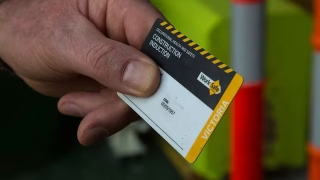
One detail that often surprises prospective students is that CPCWHS1001 Prepare to Work Safely in the Construction Industry is included as a core unit. This is the nationally recognised unit that underpins general construction induction training and is commonly delivered through a White Card course. If you have already completed CPCWHS1001, you may be eligible for credit transfer, subject to your RTO’s enrolment and evidence requirements.
For people considering a future progression pathway, the Certificate IV or Diploma of Building and Construction comparison can help clarify which qualification best aligns with their career goals and licensing requirements.
How Long Does the Cert IV in Building and Construction Actually Take?
There’s no single number here, and any article claiming otherwise is oversimplifying. Duration depends on study mode, unit load, assessment turnaround and how much of the content a student can already demonstrate through work experience. An RTO trainer will tell you the same thing every enrolment interview: the timetable on the website is a guide, not a guarantee.
What genuinely moves the needle is pace. A student doing two units at a time finishes roughly twice as fast as one doing a single unit per term, assuming assessments are submitted on schedule. That’s a simple mechanic, but it’s the one most prospective students overlook when comparing providers on duration alone.
Full-Time Study Duration
Full-time delivery commonly ranges from around 31 to 55 weeks, depending on the provider, delivery model and learner cohort. Many domestic programs are designed to be completed within approximately 8 to 12 months, while CRICOS courses are often structured over 42 to 55 weeks. Students studying the qualification through a CRICOS-registered provider commonly undertake around 20 scheduled contact hours per week, with course durations typically ranging from about 40 to 55 weeks depending on the provider.
Part-Time Study Duration
Part-time learners commonly complete the qualification over 12 to 24 months, depending on study load, workplace commitments and assessment progress. Evening classes and weekend workshops are the usual delivery pattern here. It’s slower, but it doesn’t require stepping back from paid work, which is the trade-off most part-time students consider.
Online and Self-Paced Study
Self-paced online study gives students up to 12 to 24 months to complete all units, depending on the provider’s enrolment terms. The catch is that “self-paced” cuts both ways: without a fixed timetable, some students finish early and others stall. Providers usually build in a maximum enrolment period precisely because open-ended study tends to drift. Blended courses, mixing online theory with scheduled practical sessions, sit somewhere in between and need checking unit by unit, since not every component can be done remotely.
Fast-Track and Accelerated Options
Fast-track pathways generally combine Recognition of Prior Learning (RPL) for existing trade skills with intensive, targeted modules covering business administration, building codes and contract law. Experienced tradespeople may reduce completion time through RPL and credit transfer. Depending on the amount and quality of evidence available, this can substantially shorten the training pathway, although all competency requirements must still be demonstrated.
How Does Recognition of Prior Learning (RPL) Change the Timeline?
RPL lets an assessor evaluate a student’s existing skills, licences and work history against the qualification’s competency requirements, rather than starting from scratch. For experienced construction professionals with comprehensive evidence, RPL can significantly reduce the overall completion timeframe. In some cases, assessments may be finalised within a matter of weeks, although timeframes vary between providers and depend heavily on the quality of evidence submitted.
The practical bottleneck isn’t the assessment itself, it’s the evidence. Gathering a portfolio (site photos with dates, past contracts, references, licences, training records) usually takes a student one to three weeks on its own, once all required evidence has been submitted, assessors commonly require several business days to a few weeks to review the evidence, conduct any required interviews or competency conversations, and determine whether further evidence or gap training is needed. A trainer’s honest tip here: start collecting your evidence folder before you enrol, not after. Students who arrive with photos on a random phone and nothing organised routinely add weeks to their own RPL timeline. Our guide to getting qualified through RPL walks through what a solid evidence portfolio looks like.
What Study Mode Comparison Looks Like at a Glance
| Study mode | Typical duration | Best suited to |
| Full-time | Approximately 8–12 months | Students able to study consistently, including CRICOS visa holders |
| Part-time | Approximately 12–24 months | Working tradies fitting study around employment commitments |
| Online/self-paced | Provider-dependent (often up to 24 months) | Self-motivated learners seeking flexibility |
| Fast-track | Provider and learner dependent | Experienced tradespeople seeking an accelerated pathway |
| RPL pathway | Dependent on evidence quality and assessment process | Applicants with substantial, documented industry experience |
What Factors Actually Affect Completion Time?
Beyond the study mode itself, a handful of things push timelines longer or shorter: how many units a student studies concurrently, how quickly assessments get marked and returned, whether English literacy and numeracy support is needed, and how much of the coursework overlaps with a student’s current job. Someone who regularly works with estimating, scheduling or contract administration may find certain units easier to understand because they can apply the concepts to familiar workplace situations.
Work experience helps students understand the material, but it doesn’t automatically shorten the course unless it’s formally assessed through RPL. That distinction catches people out regularly; holding a trade background is a useful context in class, but it only reduces your enrolment length if an assessor has actually reviewed and signed off on it.
Does the Cert IV Lead Straight to a Builder’s Licence?
CPC40120 Certificate IV in Building and Construction is widely recognised within builder and site supervisor licensing pathways across Australia and is commonly accepted as a qualification requirement for various building licence categories. However, licensing requirements differ between states and territories and may change over time.
In most jurisdictions, the qualification is only one part of the application process. Applicants may also need to demonstrate relevant industry experience, provide referee statements, satisfy financial or business requirements, and meet any additional criteria imposed by the relevant licensing authority.
Because builder licensing and registration are administered by state and territory regulators rather than training providers, prospective applicants should confirm the current requirements with the relevant authority before making decisions based solely on a qualification. Training packages themselves also note that builder and site supervisor licensing varies across jurisdictions and may require additional requirements beyond the qualification. If you’re considering further study, our upgrading from Certificate IV to Diploma guide explains how credit transfer may apply and what additional study may be involved.
How Do You Choose the Right RTO for This Course?
Course length alone doesn’t always provide a complete picture when comparing providers, as a shorter advertised duration may reflect differences in delivery structure, contact hours or independent study expectations.
Before enrolling, consider asking questions about the amount of trainer support available, expected assessment turnaround times, learner support services, delivery methods and the industry experience of trainers and assessors. Current industry knowledge and appropriate learner support are important components of quality vocational education and training.
It can also be useful to confirm that the qualification is current, that the RTO has the qualification on its scope of registration, and that the delivery model suits your learning style and work commitments.
Builders Institute is a Registered Training Organisation (RTO #45904), and CPC40120 delivery details, including current unit structure and study options, are available through the CPC40120 Certificate IV in Building and Construction course page.
Is the Time Investment Worth It?
For many construction professionals, CPC40120 represents an important step towards supervisory, management and builder-registration pathways. The real question isn’t simply how quickly the qualification can be completed, but whether the study mode and pace align with your current work commitments and long-term career goals. Speak to your chosen building and construction training provider directly about current course structure, unit sequencing and realistic completion timeframes before enrolling.
FAQs
How long does it take to complete a Certificate IV in Building and Construction?
The CPC40120 Certificate IV in Building and Construction may be completed in as little as a few months through an RPL pathway, while full training programs are commonly completed within approximately 8 to 24 months. Completion timeframes vary depending on the provider, delivery mode, study load and the learner’s prior experience.
How quickly can I finish the Cert IV in Building and Construction through RPL?
Recognition of Prior Learning (RPL) can significantly reduce the time required to achieve the qualification. For applicants with extensive, verifiable industry experience and a complete evidence portfolio, the RPL process may be completed within a matter of weeks. Actual timeframes vary depending on the evidence submitted, assessor review requirements and whether any gap training is required.
What is the duration of a full-time Certificate IV in Building and Construction course?
Full-time CPC40120 Certificate IV in Building and Construction programs are commonly structured over approximately 8 to 12 months, although course durations vary between providers. Factors such as delivery mode, training schedule, assessment requirements and learner cohort can all influence the overall timeframe.
How long does part-time study take for the Certificate IV in Building and Construction?
Part-time CPC40120 courses commonly take around 12 to 18 months, depending on the provider, delivery method, study load and assessment progress. Some programmes may allow a longer completion period.
Can I study the Cert IV in Building and Construction online at my own pace?
Yes, many Australian Registered Training Organisations (RTOs) offer self-paced online study options. Online students are generally given a maximum duration of 12 to 24 months to complete all 19 units of competency.
How many weekly study hours are required for the Cert IV in Building and Construction?
Study requirements vary between RTOs and delivery methods, but students should generally allow around 10–20 hours per week for classes, self-paced learning, research and assessments. The actual workload may vary depending on the course structure and the student’s prior knowledge and experience.
Is the Certificate IV in Building and Construction mandatory for getting a builder’s licence in Australia?
Not necessarily. Builder licensing and registration requirements vary between Australian states and territories, as well as by licence or registration class. CPC40120 may satisfy or contribute to the educational requirements for some pathways, but applicants should check the requirements of their state or territory regulator before enrolling.
Does holding a trade qualification shorten the Cert IV in Building and Construction duration?
It can. Qualified tradespeople may receive credit for eligible equivalent units or use Recognition of Prior Learning (RPL) to have existing skills and experience assessed, potentially reducing the amount of training required. The outcome depends on the units already completed and the evidence provided.
What are the entry requirements for the CPC40120 Certificate IV in Building and Construction?
CPC40120 has no formal entry requirements under the national qualification. However, individual RTOs may set their own enrolment requirements, such as LLN assessments, previous experience or study, and a White Card where construction site access is required. A trade background may be helpful but is not a national prerequisite for the qualification.
How many units are in the CPC40120 Certificate IV in Building and Construction?
CPC40120 consists of 19 units of competency: 11 core units and 8 elective units. The core units cover areas such as building codes, structural principles, WHS and construction planning, while elective units vary depending on the chosen Building or Site Management pathway.
Does Certificate IV in Building and Construction cover the National Construction Code (NCC)?
Yes. CPC40120 includes core units covering the application of building codes and standards, including the National Construction Code (NCC), for relevant residential and commercial building classifications. The qualification also covers structural principles, plans and specifications, and legal requirements for construction projects.
How long do assessments take to complete for each unit?
Assessment time varies between units and RTOs, depending on the assessment requirements, project complexity and the student’s prior knowledge and experience. Some assessments may be completed relatively quickly, while units involving calculations, plans, projects or workplace evidence may require more time.
Can I continue working full-time while studying the Cert IV in Building and Construction?
Yes, many RTOs offer flexible delivery options, such as part-time, online, virtual classroom or self-paced study, which can allow students to balance the course with full-time work. Availability and study schedules vary between providers.
What is the difference in duration between TAFE and private RTOs for this course?
There is no standard duration difference between TAFE and private RTOs. Course length depends on the provider’s delivery model, study schedule, assessment requirements and any credit or RPL granted. Some providers offer structured programs, while others may provide more flexible or accelerated study options.
Does the Cert IV in Building and Construction expire after completion?
No, once you are awarded the CPC40120 qualification it does not expire. However, holding the qualification does not remove any ongoing licensing, registration, CPD or industry currency requirements that may apply in your state or territory.
How long after completing the Cert IV can I apply for a Builder’s Licence?
Completing CPC40120 does not automatically make you eligible for a builder’s licence or registration. Each state and territory has its own qualification, experience and other licensing requirements, which can vary by licence or registration class. Check the relevant state or territory building regulator to confirm when you can apply and what experience you need.
What job outcomes can I expect after completing the Cert IV in Building and Construction?
CPC40120 can support career pathways in roles such as building site supervisor, construction foreman, estimator, contract administrator and other construction management positions. Depending on the state or territory, the qualification may also contribute to the requirements for builder licensing or registration, subject to the relevant regulator’s requirements.
Is practical work placement required to complete the Cert IV in Building and Construction?
CPC40120 does not specify a minimum number of work-placement hours. However, assessments may require students to demonstrate practical skills and knowledge in a real or suitably simulated construction workplace, depending on the unit and RTO’s assessment arrangements.
Can international students undertake the Cert IV in Building and Construction full-time?
Yes, international students may undertake CPC40120 on a Student visa (subclass 500) where the course is offered by a CRICOS-registered provider and meets the relevant visa requirements. Course duration, delivery arrangements and attendance requirements vary between providers, so students should check the specific CRICOS course details before enrolling.
How does the fast-track Cert IV in Building and Construction work?
Fast-track options combine Recognition of Prior Learning (RPL), credit transfer and accelerated training to assess existing skills and complete any remaining competency requirements. Completion times vary depending on the student’s experience, evidence, assessment requirements and the RTO’s delivery model.
What happens if I take a break from my Cert IV in Building and Construction studies?
Students may be able to defer or pause their studies, depending on their RTO’s deferral and enrolment policies. The permitted period and conditions vary between providers, so students should check their RTO’s requirements before taking a break. If the qualification is superseded during the enrolment period, additional transition requirements may also apply.
How long does the RPL assessment process take from application to graduation?
RPL timeframes vary depending on the amount of evidence provided, the units being assessed and the RTO’s assessment process. Students may need to provide evidence such as qualifications, work samples, references, licences and other records, with additional assessment or evidence requested where required.
Is financial support or government funding available for the Cert IV course duration?
Eligible students may be able to access government-subsidised training, depending on their state, the training provider and the funding program available. For example, eligible students may access Skills First funding in Victoria or Smart and Skilled funding in NSW, while eligible South Australian construction workers may access CITB subsidies for approved training. Funding is subject to eligibility requirements and may not cover the full course fee.
What is the difference between a Cert IV and a Diploma in Building and Construction in terms of time?
There is no nationally fixed completion time for either qualification. CPC40120 Certificate IV in Building and Construction focuses on building and site management, including construction planning, supervision, codes and standards, while CPC50220 Diploma of Building and Construction covers broader responsibilities such as structural principles, risk and financial management, estimating and contract administration for residential and commercial projects. The time required to complete either qualification depends on the RTO, study load, delivery method, assessment progress and any credit or RPL granted.
Why does the duration of the Cert IV in Building and Construction vary between states?
CPC40120 is a nationally recognised qualification, with the same national training package requirements across Australia. However, course duration can vary between RTOs because of their delivery methods, study schedules, assessment arrangements and student support. State and territory licensing requirements may also affect which qualification pathway or additional requirements a student needs to meet before applying for a builder or site supervisor licence.