How to Get Into Construction With No Experience: A Guide for School Leavers and Career Changers
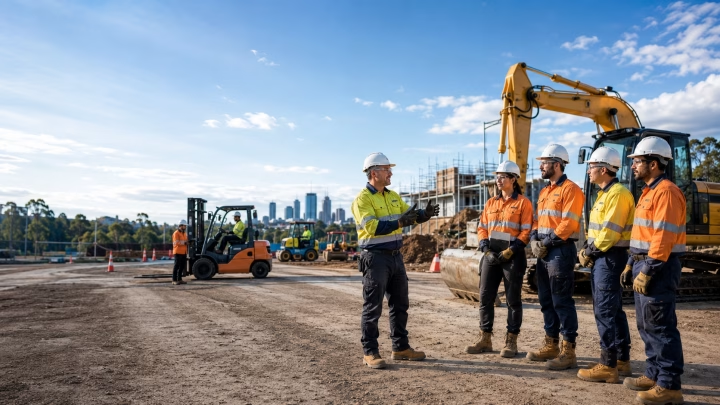
You can get into construction in Australia with no experience. Most beginners start by completing a White Card (unit CPCWHS1001), then apply for labouring, trade assistant or apprenticeship roles. Employers hire plenty of people on attitude and teach the rest on the job.
If you want structured building and construction training before you start applying, a Registered Training Organisation such as Builders Institute (RTO 45904) can set you up with the right entry-level qualification. Otherwise, the sections below cover the full path, from your first ticket to your first pay packet.
Can you get into construction in Australia with no experience?
Yes. Labouring, site assistance and trade assistant roles regularly go to people with no building background, as long as they have a White Card and turn up ready to work.
The jobs are real, but they’re not all the same. A labourer role might involve stripping formwork and sweeping out a slab. A trade assistant might spend the week carrying and cutting for a carpenter. A few roles, such as plant operation or anything electrical, need licences before you touch a thing. Read each advertisement closely before you apply.
Employers keep saying the same few things about new starters: show up on time, listen, ask when you’re unsure, and wear your PPE without being told. A site supervisor will forgive a slow cutter. They won’t forgive a worker who skips the safety brief.
What do you need before your first day on site?
At minimum, you need a White Card, safety boots and a Unique Student Identifier (USI) if you’re doing nationally recognised training. Some roles add a driver’s licence or tickets on top.
| Item | What it is | When you need it |
| White Card | Proof you’ve completed general construction induction training (CPCWHS1001) | Before any construction site work |
| USI | A free, lifelong training ID | Before enrolling in any nationally recognised course |
| PPE | Steel-capped boots, hi-vis, hard hat, glasses, gloves, hearing protection | Daily, with exact items set by the site |
| Driver’s licence | Standard car licence | Many labouring and civil roles |
| High-risk work licences | Forklift, scaffolding, crane and similar | Only for those specific tasks [VERIFY per state] |
Some people hunt for work on a building site without qualifications and find a few willing employers. It happens, but you’ll struggle to get through the gate without the White Card. Get it first.
How do you get a White Card in Australia?
You complete general construction induction training with a Registered Training Organisation, apply for your card after successfully completing the training and meeting the required identity verification checks. The national unit is CPCWHS1001 Prepare to work safely in the construction industry, which you can look up on the national register at training.gov.au.
The steps run in this order:
- Get a USI from the Australian Government’s USI service.
- Choose an RTO approved to deliver CPCWHS1001 in your state.
- Complete the training, including the assessment.
- Complete identity verification as your state requires.
- Receive your card, or a statement of attainment first while the card is processed [VERIFY by state].
Safe Work Australia develops national WHS policy and model laws, while state and territory regulators administer their own White Card processes. The Safe Work Australia website is the best to find general information and links to the relevant state or territory regulator.
The state you work in matters more than most beginners expect. If you’re based in New South Wales, the NSW White Card course follows SafeWork NSW requirements, including providing 100 points of identification to the RTO. In Victoria, the Victoria White Card course follows WorkSafe Victoria’s process which requires face-to-face classroom training and photographic ID at registration and on the day of training. Cards are generally accepted nationally, but you’ll still sit through a site-specific induction every time you start on a new project.
Trainers see one mistake over and over. Someone books the cheapest online course, doesn’t have their ID sorted, and starts a job a week later with no card in hand. Keep your statement of attainment somewhere safe until the plastic card turns up. If you’re comparing providers, the cost of a White Card in Australia varies by state and delivery method.
Is a Certificate I in Construction worth doing?
Certificate I in Construction (CPC10126) is a short introduction to the industry, and it’s worth doing if you’ve never held a tool or read a plan. It covers safe work practices, basic tools and worked with basic construction materials, and how a site communicates.
It won’t make you a tradesperson. What it does is give you a taste of the work before you commit three or four years to an apprenticeship, and it gives school leavers a pathway into a Certificate II or an apprenticeship. You can read the full details on the Certificate I in Construction page. Fees, funding and entry rules vary by state and provider [VERIFY current funding].
Before you pay for any course, check that the provider is registered. The Australian Skills Quality Authority, or ASQA, is the national VET regulator, and training.gov.au lists every registered RTO along with the qualifications it’s approved to deliver.
What entry-level construction jobs can you apply for?
The common starting points are labourer, trade assistant, groundworker and building maintenance trainee. Office-side roles such as trainee quantity surveyor or assistant site manager exist too, but they usually ask for study first.
| Role | What you’d actually do | Where it can lead |
| Construction labourer | Move materials, clean up, set out equipment, help trades | Apprenticeship, plant operation, leading hand |
| Trade assistant (trade mate) | Cut, carry and prep for a carpenter, painter or similar | Potential apprenticeship in that trade |
| Groundworker or civil labourer | Site prep, drainage support, road and earthworks tasks | Plant operator, civil supervisor |
| Building maintenance trainee | Repairs and upkeep in existing buildings | Carpentry, painting, general maintenance trades |
| Entry-level site operative | General site support under a supervisor | Trade apprenticeship or site supervision |
| Trainee site supervisor, assistant site manager, construction management trainee | Coordination, paperwork, supervising trades | Site manager, project manager |
| Trainee quantity surveyor | Take-offs, costings, tender support | Estimator, quantity surveyor |
A higher starting wage isn’t always the better offer. A labouring job where the foreman lets you shadow the carpenter will teach you far more than a slightly better-paid one where you only dig trenches.
How do you get a job on a building site with no experience?
Apply directly, apply often, and show you’re reliable. Many first jobs come from ringing small builders and subbies, as well as applying through the big job boards.
Start with local residential builders, civil contractors and labour-hire firms. Recruitment agencies that specialise in building and infrastructure can place you in casual labouring work, and casual shifts are a good way to get onsite work experience while you work out which trade appeals. Ask whether they need a White Card and a driver’s licence, then be clear about which requirements you already meet.
Sites typically start around 6:30 or 7am, so mention early starts and your own transport in your application. It sounds minor, but it answers a supervisor’s first worry before they voice it.
If an interviewer asks about safety, give an honest answer. “I’d stop and ask” beats a confident guess every time.
What construction apprenticeships can school leavers do?
School leavers can start an Australian Apprenticeship in trades such as carpentry, bricklaying, painting and decorating, plumbing and electrical. An apprenticeship combines paid work with training through an RTO.
| Trade | Typical entry route | Licence or registration |
| Carpentry | Apprenticeship with a builder or subcontractor | Varies by state for later contracting [VERIFY] |
| Bricklaying | Apprenticeship or Certificate II first | Varies by state [VERIFY] |
| Painting and decorating | Apprenticeship, or trainee painter and decorator role | Varies by state [VERIFY] |
| Plumbing | Apprenticeship through a licensed plumber | State licensing required |
| Electrical | Apprenticeship under a licensed electrician | State licensing required |
Most trade apprenticeships take around three to four years to complete, depending on the trade, qualification and training arrangements. Australian School-based Apprenticeships allow eligible secondary school students to combine paid work and vocational training with their school studies. Group Training Organisations (GTOs) employ apprentices and place them with host employers, which can help if you can’t find a single builder to take you on directly.
If you want to become a bricklayer or a plumber, ask the employer which tasks you’d actually do in year one. A good one will tell you straight.
Can you change careers into construction at 30 or 40?
Yes. Plenty of people retrain in their thirties and forties, and adult apprenticeships exist for this purpose. The trade off is money, not eligibility.
Adult apprentice wages can differ from those of younger apprentices under the relevant award or agreement. Under the Building and Construction Award, an adult apprentice is generally someone aged 21 or older when signing their training contract. Check the Fair Work Ombudsman’s Pay and Conditions Tool for the exact rate that applies to you, because it depends on your trade, applicable award or agreement, apprenticeship stage and previous employment circumstances. Run the numbers against your mortgage or rent before you resign.
Your old job counts for more than you think. A warehouse worker already knows manual handling and forklift culture. A retail or hospitality worker has handled difficult customers on a rush day, which is practice for a tense site conversation. Someone from office administration brings scheduling and paperwork, a good fit for trainee site supervisor or construction management trainee roles.
If you already have years of hands-on work in a trade, ask about recognising it. The RPL pathway in construction can turn existing skills into a formal qualification, You may only need gap training for the skills you have not yet demonstrated, so you may not have to start from zero.
Where can you find entry-level construction jobs in Australia?
SEEK is one of the major Australian job board for labouring and trade assistant roles. Workforce Australia, TAFE career services and Apprentice Connect Australian Providers (ACAPs) can help you find job opportunities apprenticeships pathways, and group training organisations will employ you directly and place you with host employers.
Try different search terms, because employers don’t all use the same title. Useful ones include construction labourer, site hand, trade assistant, apprentice carpenter, construction trainee and groundworker. Combine job boards with phone calls and walk-ins. A short call to a small builder on a Tuesday afternoon often beats fifty online applications.
How do you write a construction CV with no experience?
Keep it to one or two pages, lead with your White Card and any training, and show reliability through examples from past jobs, school or volunteering. Don’t pad it.
Open with a three-line profile saying what you want and what you offer. Then list your White Card, USI-linked training, licences and any vocational subjects. Add past work, even if it’s unrelated: a three-year hospitality job says something about punctuality. School leavers can mention woodwork, VET in Schools subjects or a weekend job.
Write a short cover letter naming why you want construction in particular. Don’t claim skills you don’t have. A supervisor who asks you to use a laser level on day one will find out fast.
Can women get into construction with no experience?
Yes. Women work across carpentry, painting, electrical, civil, estimating, site supervision and project management, and the same entry points apply: White Card, labouring or trade assistant work, or an apprenticeship.
When researching employers, look for proper amenities on site, clear conduct standards and genuine training. Industry bodies and government programs run mentoring and support initiatives, though availability varies by location [VERIFY current programs]. Builders Institute has a piece on women’s careers in construction that’s worth a read if you want an industry view.
What mistakes should beginners avoid?
The most common mistake is assuming every entry-level job has the same requirements. Some want a licence, a ticket or a year of physical work behind you, and applying blind wastes weeks.
A few others come up regularly:
- Paying for a course before checking it matches the job you want.
- Choosing a provider without confirming it’s a registered RTO.
- Skipping the site induction because “I’ve got my White Card”.
- Quitting a stable income before working out apprentice wages.
- Giving up after five knockbacks. Builders often hire when a crew member leaves mid-project, not when your application lands.
How do you progress from an entry-level job to a skilled career?
Most people move up by adding a qualification, a trade or supervision responsibility. A labourer may start an apprenticeship, a trade assistant may specialise, and a qualified tradesperson may move into leading-hand or site supervisor work.
Further study opens office and management roles, including estimating, building surveying and construction management. Builder registration is a longer path, and the rules differ between states and territories, so check with your state regulator before you plan it [VERIFY]. Plenty of tradespeople start a business later once they’ve built the experience and licences their state requires.
What should you do this week?
Book your White Card course, sort out your USI, and ring three local builders or labour-hire firms to ask who’s taking on new starters. If you’re ready for a longer plan, look at Certificate I, a school-based apprenticeship or an adult apprenticeship that matches the trade you’ve been eyeing.
FAQs
Do I need any prior experience to get a construction job in Australia?
No, prior construction experience is not required to enter the industry. Employers frequently recruit entry-level general labourers, trade assistants, and trainees based on reliability, physical fitness, and a strong work ethic.
What basic certification is compulsory before working on an Australian building site?
You must complete General Construction Induction Training to receive a White Card. This mandatory national credential provides evidence that you have completed the required general construction induction training and understand basic workplace health and safety (WHS) requirements for construction work.
How do I obtain a White Card in Australia?
You can complete the course (unit CPCWHS1001) through a registered training organisation (RTO). Depending on state or territory regulations (such as SafeWork NSW or WorkSafe Victoria), training is completed face-to-face or via approved online courses.
What are the best entry-level construction roles for school leavers in Australia?
School leavers commonly start as general labourers, trade assistants, traffic controllers, or by entering a trade apprenticeship in fields like carpentry, plumbing, or electrical trades.
Can mature-age career changers secure Australian construction apprenticeships?
Yes, adult apprenticeships are widely available across Australia. Employers value mature-age apprentices for their transferable soft skills, life experience, and reliability.
What transferable skills do Australian construction employers look for?
Key transferable skills include timekeeping, teamwork, physical stamina, basic problem-solving, and strict adherence to workplace health and safety rules. Experience in warehousing, agriculture, landscaping, or physical trades translates well.
How much can an entry-level construction worker expect to earn in Australia?
Starting wages for entry-level labourers or trade assistants generally align with the Building and Construction General On-site Award, with starting hourly rates often depending on the employee’s classification, employment arrangement, applicable industry allowances, and any relevant enterprise agreement. Under the Award, minimum hourly rates for Level 1 classifications range from $26.67 to $28.05 from 1 July 2026, before applicable allowances.
What is the difference between a traineeship and an apprenticeship in Australia?
An apprenticeship trains you in a period specified in the training contract, resulting in a nationally recognised qualification, commonly a Certificate III. A traineeship provides structured workplace training and vocational qualifications in a range of industries, including civil construction and site operations. The duration and qualification depend on the training arrangement.
Do I need a university degree to become a site supervisor or construction manager?
Not necessarily. While a Bachelor of Construction Management is one pathway, many professionals start on the tools and progress by completing a Certificate IV or Diploma of Building and Construction through TAFE or an RTO.
How do school leavers start a construction pathway while still in secondary school?
High school students can undertake Vocational Education and Training (VET) Delivered to Secondary Students (VETDSS) or begin a School-Based Apprenticeship and Traineeship (SBAT) to gain credit toward a trade while finishing the Australian Senior Secondary Certificate of Education.
Are there specific government incentives for starting a construction apprenticeship in Australia?
Yes, the Australian Government offers subsidies, financial support, and other eligible payments through programs administered with the assistance of Apprentice Connect Australia Providers to help apprentices cover costs during their training.
How do labour hire agencies assist beginners in getting construction work?
Labour hire recruitment agencies match short-term or casual staffing needs for builders. Registering with local labour hire firms is often the fastest route to land immediate casual site labouring work.
What personal protective equipment (PPE) must I supply myself when starting out?
Employers must provide necessary protective clothing and equipment, including high-visibility clothing, where required. Workers may need to wear suitable work trousers and safety footwear. If steel-cap safety boots are required, employers must reimburse employees for their cost under the Building and Construction General On-site Award
Can I get an entry-level job in civil construction without trade qualifications?
Yes, civil construction projects (such as roads, rail, and infrastructure) regularly employ entry-level site operatives and plant operator trainees without prior trade experience.
What high-risk work licences (tickets) increase entry-level hiring chances?
Holding additional tickets alongside a White Card—such as Working at Heights, Confined Spaces, First Aid, or a Forklift licence (LF)—significantly improves employability.
Is construction work in Australia suitable for women entering the industry?
Yes, Australia actively encourages women to join the building and construction sectors through dedicated government initiatives, group training organisations (GTOs), and industry networking groups.
How does a beginner format a construction CV with no prior site experience?
Highlight your White Card and valid driver licence at the top. Emphasise physical fitness, punctuality, safety awareness, and relevant transferable work history (such as manual handling or logistics).
Do I need my own vehicle to work in construction in Australia?
Having an Australian driver licence and reliable personal transport is highly advantageous, as many job sites are not accessible via public transport early in the morning.
What role do Group Training Organisations (GTOs) play for apprentices?
GTOs employ apprentices directly and host them out to different building contractors, ensuring steady work, structured TAFE training, and support throughout the entire apprenticeship.
Can I work in construction while holding a temporary Australian visa?
Yes, working holiday visa holders (subclass 417 and 462) can work in entry-level casual labouring roles, provided they hold a valid Australian White Card and obey their visa conditions.
How do TAFE courses help career changers enter the construction sector?
TAFE institutes offer pre-apprenticeship courses (such as a Certificate II in Building and Construction) that teach foundational trade skills, tool safety, and industry practices before applying for full apprenticeships.
What is the standard working week for entry-level site workers in Australia?
Standard site hours typically begin early (often 6:30 am or 7:00 am) from Monday to Friday, with Saturday overtime frequently available on larger residential and commercial projects.
How do I progress from general labourer to a specialized trade assistant?
Demonstrate reliability, show initiative on site, observe tradespeople closely, and express your interest directly to site supervisors or sub-contractors about assisting specific trades like carpentry or concreting.
Are there union requirements for entry-level construction workers in Australia?
Joining an industry union (such as the CFMEU) is optional for workers, though union-negotiated Enterprise Bargaining Agreements (EBAs) often dictate site pay rates and employment conditions on major commercial projects. Workplace health and safety requirements are governed by applicable WHS or OHS laws and regulations.
Where are construction vacancies for beginners advertised in Australia?
Entry-level roles are listed on job portals like SEEK, Indeed, and Workforce Australia, as well as through direct sign-ups with labour hire agencies, social media trade networks, and direct inquiries to local builders.