NCC 2025 Explained: What Changes for Builders and When It Starts in NSW, Victoria and Queensland
Victoria has adopted NCC 2025 from 1 May 2026 while New South Wales and Queensland won’t switch over until 1 May 2027, so NCC 2022 Amendment 2 remains the current code in those two states. The main NCC 2025 changes for builders sit in commercial and apartment work: stronger water management provisions to reduce water ingress, new carpark fire provisions, higher commercial energy efficiency standards, mandatory on-site solar photovoltaic systems for new commercial buildings, and revised condensation management requirements. Residential buildings also have some changes, particularly around condensation management, but the broader residential energy efficiency requirements remain largely unchanged.
If you’re building across state borders, that split matters more than any single technical amendment. Two code editions, different state variations and different certifier requirements can create an easy way to submit the wrong specification. Here’s what changed, who it hits, and what to do about it before your next approval.
What is the National Construction Code 2025?
The National Construction Code (NCC) 2025 is the national set of technical requirements for building and plumbing work in Australia, published by the Australian Building Codes Board (ABCB). It sets minimum standards for safety, health, amenity, accessibility and sustainability. The ABCB released a preview edition on 2 February 2026 and published the final edition on 1 May 2026.
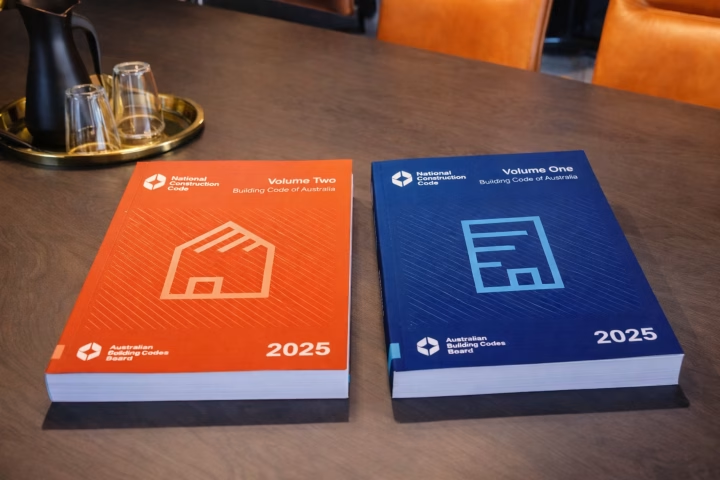
The Code runs across three volumes. Volume One covers Class 2 to Class 9 buildings, so apartments, offices, shops and the like. Volume Two covers houses, townhouses and other Class 1 and Class 10 buildings. Volume Three is the Plumbing Code of Australia. The Building Code of Australia (BCA) refers to Volumes One and Two, while the Plumbing Code of Australia (PCA) is Volume Three.
The Code is national, but adoption isn’t. Each state and territory decides when the new edition becomes law and adds its own variations on top. That’s the part that trips people up.
When does NCC 2025 start in NSW, Victoria and Queensland?
NCC 2025 became mandatory in Victoria on 1 May 2026, and will become mandatory in both NSW and Queensland on 1 May 2027. Until then, NCC 2022 continues to apply in NSW and Queensland, subject to their respective state variations and requirements.
| State | NCC 2025 start | What applies until then |
| Victoria | 1 May 2026 | NCC 2025 is already in force. NCC 2022 applied before this date, subject to transitional arrangements for projects already underway. |
| New South Wales | 1 May 2027 | NCC 2022 Amendment 2, which came into effect on 29 July 2025. |
| Queensland | 1 May 2027 | NCC 2022, together with Queensland-specific variations. |
One detail that catches builders out: although NCC 2025 was published and made available for adoption from 1 May 2026. NSW and Queensland have both deferred its mandatory commencement until 1 May 2027. Do not assume that you can voluntarily apply the new edition to projects in these states before that date. The applicable edition depends on the relevant state requirements and project circumstances.
The other states and territories have their own adoption arrangements, including different commencement dates, transition periods and state-specific variations. If you work in the ACT, Tasmania, South Australia, Western Australia or the Northern Territory, check each regulator directly rather than relying on a general summary.
What are the main NCC 2025 changes for builders?
The main changes affect water management, condensation, carpark fire safety and commercial energy efficiency, across Volume One and the Housing Provisions. Building Ministers locked in that scope at their October 2025 meeting, and cut several earlier proposals, including additional residential energy efficiency changes and mandatory EV charging provisions (source: Building Ministers’ Meeting communiqué, October 2025).
How does NCC 2025 change waterproofing and water ingress rules?
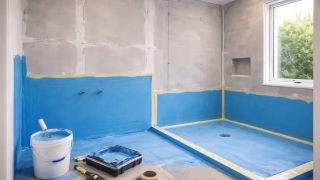
NCC 2025 strengthens water management requirements for commercial buildings and Class 2 apartment buildings, with a focus on reducing surface and sub-surface water ingress. Balconies, podiums, concrete roofs and external drainage details are particularly important areas to review.
The changes include requirements for structural substrates to provide adequate falls towards drainage outlets, specific step-down and hob provisions, improved treatment of exposed joints, and requirements for waterproofing membranes to be installed directly on suitable structural substrates.
Key provisions include:
- F1D4 – Provision of drainage and grading to external areas: Includes a minimum 1:80 fall for relevant concrete roofs, balconies and similar areas, together with drainage requirements.
- F1D5 – Substrate materials: Specifies acceptable structural substrate materials.
- F1D6 – Exposed joints: Introduces additional requirements for the location and protection of exposed joints.
- F1D7 – External waterproofing membranes: Requires membranes to be installed directly on the structural substrate.
- F1D10 – Surface finishes: Addresses surface drainage and the management of sub-surface water.
If you’ve ever chased a leak back through a balcony threshold to a drainage detail someone drew in 2009, you’ll know why. The fix usually isn’t a better membrane. It’s coordination between the architect, hydraulic engineer, waterproofer and the supervisor who actually sees the substrate on the day. Check your drawings for where the membrane terminates, where falls run and who signs it off. Our guide on who can sign off on waterproofing covers that last point in plain terms.
What are the new condensation management rules?
The revised condensation provisions aim to manage moisture within external walls and roof spaces, reducing the risk of condensation accumulating within building assemblies.
NCC 2025 introduces more detailed requirements for external wall construction and roof-space ventilation. Separate roof ventilation provisions now apply depending on whether the primary insulation layer is parallel or not parallel to the roof plane. Certain smaller roof configurations under 10 m² have reduced ventilation opening requirements, although the applicable requirements depend on the roof design and climate zone. These provisions apply in climate zones 6, 7 and 8.
The relevant clauses include F8D3, F8D5 and F8D6 in Volume One, and Clauses 10.8.1, 10.8.3 and 10.8.4 in the Housing Provisions.
Condensation shows up in the gaps between trades. The roofer fits the sarking, the insulation crew packs batts hard against it, and nobody checks the airflow path. Walk through your roof build-up in sequence, from lining to ridge, before anyone orders materials.
What are the NCC 2025 carpark fire safety requirements?
NCC 2025 expands mandatory sprinkler protection to carparks with more than 40 parking bays, including open-deck carparks. It also changes the conditions under which certain fire resistance concessions are available. These changes matters most for apartments and mixed-use buildings with basement, podium or multi-level parking.
Sprinklers aren’t just a hydraulic line item. They shift ceiling heights, service routes and sometimes slab-to-slab dimensions, which the Australian Institute of Architects WA flagged in its February 2026 submission on NCC 2025. The submission specifically raised concerns about pipe runs, hangers and sprinkler head placement in mixed-use projects. Bring the fire engineer in at concept stage, not after the structure’s been priced.
What are the commercial energy efficiency and solar PV requirements?
NCC 2025 strengthens energy efficiency requirements for applicable commercial buildings and introduces mandatory on-site solar photovoltaic (PV) systems for certain building classes under Section J9D5. The solar requirement can be met through available roof-space coverage or an alternative system capacity calculated according to the building’s conditioned floor area and climate zone. Exclusions apply to certain roof areas, including those used for plant, access and other building services. It isn’t a blanket solar mandate for every building. Whether it applies to your project depends on the building class, the relevant Volume One clause and any state variation.
The practical issue is roof space. Plant, access, structure and shading all compete for it, so solar needs to be in the design before the roof is. Glazing, envelope and lighting controls also come into play. Our team has run a webinar on energy efficiency compliance for apartments if you want a structured walk-through.
Does NCC 2025 change anything for houses and townhouses?
Very little in terms of new residential energy efficiency requirements. Building Ministers agreed in October 2025 to pause further residential NCC changes until mid-2029, apart from essential safety and quality fixes (source: Building Ministers’ communiqué).
That means no additional residential energy efficiency stringency in NCC 2025. The 7-star NatHERS thermal performance requirement introduced under NCC 2022 remains in place, subject to applicable state requirements. The livable housing provisions introduced under NCC 2022 also remain unchanged where adopted them. However, state adoption differs: Victoria made the livable housing provisions mandatory from 1 May 2024, while NSW did not adopt them. If you want a refresher on those standards, we’ve run a session on livable housing design.
But “little” isn’t “nothing”. The updated condensation rules affect residential roof and wall design, and NCC 2025 also references revised Australian Standards, including AS 4055 for wind loads on housing, amended parts of AS 1684 for residential timber framing, and AS 1926.1 for swimming pool safety barriers. If your standard house plans call up older editions, it’s worth checking now.
Which NCC edition applies to my project?
The edition that applies depends on the state or territory, and on the approval and transitional rules in that jurisdiction. The national publication date doesn’t decide it.
In Victoria, NCC 2025 applies from 1 May 2026. However, transitional arrangements allow certain projects that had already commenced design or construction before that date to continue under the earlier requirements. Eligibility depends on the applicable legislation and transitional guidance, including Minister’s Guideline MG-13. Confirm this with the relevant building surveyor before proceeding.
In NSW and Queensland, NCC 2022 continues to apply until 1 May 2027. Neither state has announced general voluntary early adoption before that date.
Builders often assume a development approval, building permit or construction certificate locks in the code edition the same way everywhere. It doesn’t. Ask your certifier or building surveyor to confirm the edition in writing, and keep records of design milestones and approval dates. When a dispute turns up later, a dated email saves a lot of grief.
At the Code level, compliance still runs through Deemed-to-Satisfy Solutions, Performance Solutions or a combination of both. NCC 2025 clarifies aspects of Performance Solution assessment for structural reliability and fire safety, including changes to A2G2, B1P1 and H1P. If you’re relying on a Performance Solution, the evidence needs to be tidy: engineering reports, product data and a clear link back to the relevant Performance Requirements.
What do builders working across NSW, Victoria and Queensland need to watch?
You need separate compliance checks for each job, because a detail that works under NCC 2025 in Victoria may not match what an NSW or Queensland certifier expects under NCC 2022. Victoria has also reduced the number of its state variations, while NSW and Queensland retain their own state-specific variations and requirements.
Here’s a mistake that’s easy to make. A business updates its standard balcony waterproofing detail for a Victorian apartment project, then reuses that detail on a Brisbane job without checking which code edition and state variations sit behind it. Nothing looks wrong on the drawing. The certifier notices at assessment, and now the project team is redrafting.
Set up a simple check at the start of every job. Confirm the state, the code edition, any variation and the building class, then record it on the project file. Our NCC 2025 updates session is a good starting point if your estimators and supervisors haven’t had a code briefing yet.
What are the NSW and Queensland variations to NCC 2025?
NSW has announced variations that include allowing apartment building owners undertaking remedial building work to choose between the existing NCC waterproofing requirements and the new NCC 2025 provisions. The state has also confirmed that the new NCC 2025 energy efficiency standards will not apply to common areas of apartment buildings. Queensland has deferred commencement of NCC 2025 until 1 May 2027 through its Schedule 7 variations. Its existing state variations will continue, alongside the Queensland Development Code (QDC) and Queensland Plumbing and Wastewater Code (QPWC), which may vary parts of the NCC that apply at the time.
Plumbing is a frequent trap. Victoria’s lead-free plumbing product requirements for drinking water installations started on 1 May 2026 under NCC 2025 Volume Three, but they apply specifically to copper alloy products that come into contact with drinking water. These products must meet the new lead-content limits and carry the appropriate Lead-Free WaterMark certification. If a plumber quotes you a change, ask which edition and which state it comes from.
NSW builders can also read our summary of the NSW building regulations update for state-level context.
How can builders prepare for NCC 2025?
Start with the amendments that touch your building classes, not the whole Code. A residential builder in Queensland doesn’t need to study carpark sprinklers on day one. An apartment developer in Melbourne already should have.
- Confirm the state, building class and code edition for each live and upcoming project.
- Read the relevant NCC 2025 clauses and compare them with your current specifications.
- Flag the main changes relevant to your projects: water ingress, condensation, carpark fire safety and commercial energy efficiency. Remember that condensation provisions also affect residential buildings.
- Bring architects, hydraulic and fire engineers and your certifier in early where an amendment touches the design.
- Update standard details, templates and subcontractor scopes, and date the revisions.
- Brief project managers, estimators and supervisors, because a requirement nobody on site has heard of doesn’t get built.
If you’re still working towards your licence, a qualification like the Certificate IV in Building and Construction covers building codes and standards, building classifications and construction documentation. Builders Institute is a Registered Training Organisation (RTO #45904), and you can check any RTO’s registration on training.gov.au.
What does the residential NCC pause mean for builders?
It gives residential builders greater regulatory certainty until mid-2029, with the exception of essential safety and quality changes. In October 2025, Building Ministers agreed to pause further residential changes to the NCC following the finalisation of NCC 2025. The pause is also intended to provide an opportunity to streamline and modernise the Code.
However, this does not mean that all building requirements are frozen. State and territory variations and other regulatory requirements still need to be considered. Builders should also check which edition of an Australian Standard is referenced by the applicable NCC rather than automatically applying the latest published edition.
Plan for a quieter few years, then use them to tighten your processes instead of coasting. Our broader piece on compliance updates builders need to be aware of covers some of the habits worth building.
What should you do next?
Pick your next three projects and confirm, in writing, which NCC edition applies to each one. If you can’t answer that in five minutes, that’s your first job this week. Everything else on the list above follows from it.
For structured, practical training in this space, have a look at Builders Institute’s building and construction training options.
FAQs
What is NCC 2025?
The National Construction Code (NCC) 2025 is Australia’s national set of technical requirements for the design, construction and performance of buildings and plumbing systems. It is published by the Australian Building Codes Board (ABCB) and sets minimum requirements for safety, health, amenity and sustainability.
When does NCC 2025 come into effect across Australia?
The ABCB officially published NCC 2025 on 1 May 2026. However, adoption dates vary significantly depending on the state or territory building regulator.
What is the NCC 2025 adoption start date for Victoria?
Victoria adopted NCC 2025 on 1 May 2026 through the Victorian Building Authority (VBA).
When will NCC 2025 start in New South Wales?
New South Wales will adopt NCC 2025 on 1 May 2027. The NSW Government deferred the adoption date to provide the building industry with additional time to transition.
When will Queensland adopt NCC 2025?
Queensland will adopt NCC 2025 on 1 May 2027 under the Queensland Building and Construction Commission (QBCC) regulatory framework.
Why do start dates for NCC 2025 differ between NSW, Victoria, and Queensland?
The ABCB publishes the national Code, but state and territory governments are responsible for adopting and administering building regulations in their jurisdictions. They can set different commencement dates, transitional arrangements and local variations.
Which edition of the code applies if my project spans across the start date?
The applicable edition depends on the state or territory and its transition rules. Relevant dates may include the commencement of design, the lodgement of an approval application or the issue of a building approval. Builders should confirm the applicable edition with their building surveyor, certifier or relevant regulator rather than assume one date applies to every project.
What key waterproofing changes are included in NCC 2025?
NCC 2025 strengthens water management requirements for commercial buildings and apartment buildings. The changes address how buildings manage surface water, rainwater and other sources of water to reduce the risk of water entering buildings and causing damage. Builders and designers should review the relevant provisions and project details rather than assume the changes are limited to wet-area waterproofing under AS 3740
How does NCC 2025 update condensation management for Australian homes?
NCC 2025 updates condensation management provisions for residential and other relevant building classes. Changes include requirements relating to vapour-permeable materials in external walls and roof-space ventilation. The appropriate construction and ventilation approach depends on the building design, climate zone and applicable provisions.
What are the new fire safety provisions for carparks in NCC 2025?
NCC 2025 introduces changes to carpark fire safety, including expanded sprinkler protection requirements for certain carparks. The requirements depend on the carpark’s design and classification. Builders should check the relevant NCC provisions and fire safety design rather than assume that every carpark must meet the same sprinkler or fire-resistance requirements.
Does NCC 2025 require electric vehicle (EV) charging infrastructure?
The additional residential EV charging provisions proposed during the NCC 2025 consultation process were not included in the final edition. Existing requirements for EV charging infrastructure in certain commercial buildings under NCC 2022 remain relevant where adopted by the applicable state or territory.
What changes apply to commercial energy efficiency in NCC 2025?
NCC 2025 strengthens energy efficiency requirements for certain commercial buildings. Changes include improved building energy performance provisions and requirements for on-site solar photovoltaic (PV) systems in designated building classes. The specific requirements depend on the building classification, design and applicable compliance pathway.
How are Class 1 residential dwellings affected by NCC 2025?
Class 1 homes are affected by the applicable residential provisions, including updated condensation management requirements. However, proposed broader residential energy efficiency and EV charging changes were not included in NCC 2025. Builders should check the final Housing Provisions and any state-specific requirements relevant to their projects.
What changes apply to Class 2 multi-storey residential apartment developments?
Class 2 buildings are affected by strengthened water management provisions and relevant condensation and fire safety changes. The exact requirements depend on the building’s design and classification. Builders should review the applicable provisions rather than assume that every apartment development has the same drainage, fire exit or acoustic changes.
What is the difference between a Deemed-to-Satisfy (DTS) solution and a Performance Solution under NCC 2025?
A Deemed-to-Satisfy (DTS) Solution follows the NCC’s prescribed technical provisions for meeting the relevant Performance Requirements. A Performance Solution uses an alternative design or construction approach and must demonstrate that it meets the relevant Performance Requirements using an assessment method permitted by the NCC.
How does NCC 2025 impact cross-border builders operating across NSW, Victoria, and Queensland?
Builders operating across state borders must manage multi-code compliance, as projects in Victoria follow NCC 2025, whereas projects in NSW and Queensland continue operating under NCC 2022 until May 2027.
Does NCC 2025 alter roof ventilation requirements?
Yes, NCC 2025 expands roof space ventilation and air passage obligations to additional Australian climate zones (including climate zones 4 and 5 along coastal NSW and southern QLD) to prevent trapped moisture.
What are the lead-free plumbing regulations associated with recent NCC standards?
Lead-free requirements apply to copper-alloy plumbing products that come into contact with drinking water. The maximum weighted average lead content is 0.25%, and applicable products must meet the relevant WaterMark certification and lead-free marking requirements. Victoria commenced these requirements on 1 May 2026. The national transition date has been extended to 1 May 2028, so builders and plumbers should check the rules applying in their jurisdiction.
Are existing building plans affected if a project construction date is delayed?
A delay does not automatically mean that an existing project can continue under an earlier NCC edition. The applicable requirements depend on the jurisdiction’s transition rules and the project’s approval and commencement history. Builders should confirm the position with the relevant building surveyor or certifier before relying on an earlier approval or set of plans.
How does the Victorian Building Authority (VBA) enforce NCC 2025 transition rules?
Victoria’s Building and Plumbing Commission (BPC) oversees building and plumbing regulation in the state. Building surveyors and other relevant practitioners are responsible for applying the appropriate requirements to projects, including NCC 2025 and Victorian variations. Transitional arrangements must also be considered.
What role does Building Commission NSW play in NCC 2025 oversight?
Building Commission NSW oversees practitioner compliance, state variations, and registration standards, ensuring builders and certifiers prepare for the state’s 1 May 2027 adoption date.
How does the QBCC manage NCC 2025 compliance in Queensland?
The Queensland Building and Construction Commission enforces building code updates and licensing compliance, aligning regional variations with the Queensland Development Code (QDC) ahead of May 2027.
Where can builders access the official NCC 2025 volumes?
Builders can access the NCC 2025 volumes and the ABCB Housing Provisions free of charge through the official Australian Building Codes Board website.
Do state-specific variations override national NCC 2025 provisions?
State and territory variations modify or supplement the national NCC requirements where adopted under local legislation. Builders must check both the national provisions and the applicable state or territory variations when determining project compliance.
What steps should Australian builders take to prepare for NCC 2025 enforcement?
Builders should identify which NCC edition applies to each project, review relevant changes and state variations, update specifications and construction details, consult design professionals and certifiers early, and brief their project teams and subcontractors on the requirements that affect their work.