What Is a Waterproofing Certificate and Who Needs One?
A waterproofing certificate is a document issued by a suitably qualified or licensed contractor or authorised building practitioner that records details of waterproofing work and may confirm that it complies with the National Construction Code and relevant Australian Standards, such as AS 3740 for domestic wet areas or AS 4654.2 for external waterproofing membranes.
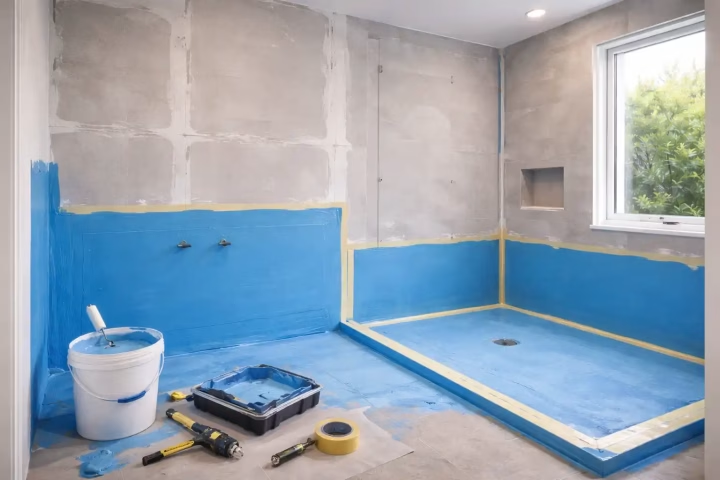
Whether a certificate is required depends on the state or territory, the type of work and the applicable regulatory, contractual or approval requirements. Waterproofing documentation may be requested during inspections, property transactions, insurance assessments or building handovers, but a certificate is not automatically required in every situation. Without appropriate documentation, tiles installed over a shower recess can make the underlying waterproofing work more difficult to inspect.
Why Bother With a Certificate at All?
Once tiles, screed, or decking go over a membrane, nobody can easily see what’s underneath. A waterproofing certificate can provide evidence that the job was completed and inspected before it was covered. In insurance disputes, missing documentation can make it harder to establish how the waterproofing work was carried out. If there isn’t any, proving compliance may become more difficult.
is the only record that the job was done properly before it disappeared from view. Builders Institute trainers who’ve sat through insurance disputes see the same pattern every time: a leak turns up two years later, and the first question from the loss adjuster is “where’s the paperwork?” If there isn’t any, the claim gets a lot harder to prove.
For a building and construction training provider like ours, this isn’t an abstract compliance box. Students working toward a Certificate IV in Building and Construction deal with exactly this documentation as part of running a compliant site, and getting it wrong is one of the more expensive mistakes a new builder can make.
Who Actually Needs a Waterproofing Certificate?
Anyone renovating a wet area, building a balcony, tanking a basement, or completing a podium deck needs waterproofing documentation, depending on the applicable state or territory requirements and the nature of the work. A certificate may also be requested when selling a property where waterproofing work was recently completed. Builders and site supervisors may need it for their project records. Certifiers may require relevant documentation before signing an Occupation Certificate, depending on the applicable requirements. Homebuyers and their inspectors may use it to help check whether bathroom renovations were completed in accordance with the relevant requirements. Strata committees may also need waterproofing documentation because a leaking shower in one unit can affect the units below it.
Property developers usually build certification into their quality assurance process from day one, because retrofitting proof after the fact is far harder than collecting it during the job. Homeowners doing a single bathroom renovation are the group most likely to skip this step, and it’s the group most likely to regret it at settlement.
Who Is Legally Allowed to Sign One Off?
This is where the rules genuinely differ by state, and it trips people up constantly.
| State | Who can sign off | Notes |
| NSW | A contractor holding the appropriate waterproofing licence or a qualified supervisor certificate. | Residential waterproofing work valued at more than $5,000 in labour and materials (including GST) requires a contractor licence. |
| Victoria | The person carrying out the work must meet the applicable requirements. A registered building practitioner may be required for certain building work. | Registration requirements depend on the type and scope of work. Waterproofing must comply with the applicable NCC requirements and relevant standards. |
| Queensland | A suitably licensed contractor or another person legally authorised to carry out or certify the relevant work. | Waterproofing is a regulated licence category. The applicable requirements depend on the work and the relevant building approval. |
As a rule of thumb, the person legally authorised to certify waterproofing compliance depends on the state or territory and the type of work involved. Compliance may be demonstrated through an applicable deemed-to-satisfy solution using AS 3740 or AS 4654.2, or through another permitted compliance pathway. An owner-builder’s ability to carry out or certify work also depends on the applicable state requirements. Safe Work Australia publishes the national WHS framework while the relevant state or territory building authority is the appropriate source for checking waterproofing licensing, registration and certification requirements.
these state rules sit under, and the relevant state building authority is the body to check with directly if you’re unsure which category applies to your job.
What Should Actually Be on the Certificate?
A waterproofing certificate or compliance record should identify the property, the areas covered, the membrane product and manufacturer, the contractor’s name and relevant licence details, and the installation and inspection dates, where applicable. It should also state what work was completed and identify the relevant compliance requirements. Depending on the project, it may include the warranty period and maintenance requirements. A document that simply says “waterproofing complete” without supporting details may provide limited evidence if a dispute arises.
If you’re reviewing a certificate someone has handed you, check the contractor’s licence details with the relevant state authority where licensing applies. A certificate without a licence number is not automatically invalid, but the person issuing it should be appropriately authorised where required.
How Do You Get One?
Getting the certificate is simple if you plan for it from the start: pick a licensed waterproofer, agree on the product and system before work starts, have the membrane inspected once it’s cured (this is the pre-tiling inspection, and it has to happen before anything goes over the top), and get the signed certificate handed over with the invoice. Skipping the pre-tiling inspection is the single most common reason people end up chasing a retrospective certificate months later, and by then the only options are invasive testing or educated guesswork.
What Does It Cost?
If you’re using a licensed contractor for the full installation, the certificate is normally bundled into the trade quote at no extra line item. If you need an independent inspector to assess and certify existing or third-party work, expect a separate inspection fee. As a general guide, standalone waterproofing certificates typically add somewhere between $150 and $500 to a job when bundled with the waterproofer’s own sign-off, while a fully independent inspection, especially one involving moisture testing or more invasive checks on work someone else completed, can run anywhere from $250 up to $1,000 or more depending on the property size, location, and how much testing is involved.
These figures move around a fair bit between states and even between suburbs, so it’s worth getting a written quote from a licensed local contractor or building certifier before budgeting for one. Treat the certificate as part of the waterproofing spend, not an optional add-on you can skip to save a few hundred dollars, given what a failed claim later can cost.
How Long Does a Waterproofing Certificate Last?
The certificate itself is a permanent record of what was true on the inspection date, it doesn’t expire. What does have a shelf life is the statutory home warranty insurance behind the work (state-specific, commonly several years) and any manufacturer warranty on the membrane product itself. [VERIFY exact warranty periods against current state legislation and the specific product’s warranty terms, as these vary and shouldn’t be stated as a single figure.] Keep the certificate with your other property documents indefinitely, because it’s evidence you may need well after any warranty period has closed.
Do I Need One for a Property Sale?
Not automatically. If wet area or external waterproofing work has been done recently, a buyer or building inspector may ask for the relevant documentation. Missing records may raise questions about how the work was completed, although the absence of a certificate does not automatically delay or prevent a sale. Sellers who keep construction documentation organised from the start of a renovation, rather than scrambling for it before an open home, tend to have a much smoother settlement.
Certificate vs Guarantee: What’s the Difference?
A certificate confirms the work was inspected and met the standard on a specific date. A guarantee or warranty is a separate promise, usually from the manufacturer or the contractor, that covers repair or replacement if something fails within a set period. You want both, not one instead of the other. A guarantee with no certificate behind it is hard to enforce, because you can’t prove the original installation was compliant in the first place.
Can You Get a Retrospective Certificate?
Sometimes, but it’s a harder and more expensive path than doing it right the first time. Because the membrane is buried under tiles or decking, a certifier or specialist can only assess it using non-invasive moisture testing, or by cutting into a section to check directly. Neither method is as reliable as a proper pre-tiling inspection would have been, and some certifiers will decline to certify retrospectively at all if they can’t get confident evidence.
A Mistake We See Constantly
The most common error isn’t a bad membrane, it’s timing. People wait until the reno is finished, or worse, until they’re trying to sell, before asking about the certificate. By then the pre-tiling inspection window has closed and there’s no way to verify what’s under the tiles without pulling them up. Sort out who’s certifying the work and when the inspection needs to happen before the first coat of membrane goes on, not after.
A Final Note
A waterproofing certificate is worth almost nothing as an afterthought and worth a lot as a plan you make before the first coat goes on. If you’re a builder or tradesperson wanting to properly understand licensing thresholds, compliance obligations, and how waterproofing sign-off fits into the wider building approvals process, that’s core material in bi.edu.au’s Certificate IV and Diploma programs – training delivered by Builders Institute, RTO #45904.
FAQs
What is a waterproofing compliance certificate in Australia?
A waterproofing compliance certificate is a document that records details of waterproofing work and may confirm that it complies with the applicable National Construction Code (NCC) requirements and Australian Standards, such as AS 3740 for domestic wet areas and AS 4654.2 for external waterproofing membranes. The requirements for issuing such documentation depend on the state or territory and the type of work.
Who needs a waterproofing certificate in Australia?
Homeowners, property developers, owner-builders, and commercial building managers need a waterproofing certificate whenever they construct or renovate wet areas, balconies, or retaining walls. It is routinely required by private certifiers, local councils, body corporates, and mortgage lenders before granting building sign-offs or Occupation Certificates.
Which Australian Standards govern waterproofing certificates?
AS 3740, Waterproofing of domestic wet areas, covers domestic wet-area waterproofing. AS 4654.2, Waterproofing membranes for external above-ground use — Design and installation, covers the design and installation of external waterproofing membranes. The applicable requirements depend on the building and type of work.
Is a waterproofing certificate mandatory for a bathroom renovation?
Not every bathroom renovation automatically requires a separate waterproofing certificate. Waterproofing work must meet the applicable requirements, while documentation and inspection obligations depend on the state or territory, the scope of the renovation and any relevant building approval conditions.
Who is legally allowed to issue a waterproofing compliance certificate?
The requirements depend on the state or territory and the type of work being performed. Waterproofing contractors must hold the relevant licence or registration where required by law. However, there is no single national rule stating that only a licensed waterproofer or registered building certifier can issue every type of waterproofing compliance document. Check the requirements of your state or territory before engaging a contractor.
What key details must be listed on an Australian waterproofing certificate?
A waterproofing certificate or installation record should identify the property, the areas waterproofed, the contractor, the waterproofing system and the date of installation. It is also useful to record the membrane manufacturer and product, relevant installation requirements, inspection findings and any testing undertaken. The exact information required depends on the applicable regulations, project specifications and contract. A declaration of compliance should only be made where supported by the relevant evidence.
Why do private certifiers require a waterproofing certificate before issuing an Occupation Certificate?
Where required by the applicable approval conditions or building regulations, certifiers may request waterproofing records, inspection reports and other evidence that the work complies with relevant building requirements. Because waterproofing membranes are often concealed by tiles or other finishes, inspections before covering the membrane can help identify defects early. However, a separate waterproofing certificate is not universally required before every Occupation Certificate is issued.
Do I need a waterproofing certificate for an outdoor balcony?
Balconies exposed to weather may require compliant waterproofing under the applicable building requirements. The ABCB’s NCC 2022 guidance identifies AS 4654.1 and AS 4654.2 as relevant to external waterproofing systems, including balconies and terraces over habitable rooms. Whether a separate compliance certificate is required depends on the project, approvals and applicable state or territory rules.
Can an owner-builder issue their own waterproofing compliance certificate?
An owner-builder should not assume that they can issue a certificate that satisfies every regulatory or contractual requirement. The rules depend on the jurisdiction, the type of work and the document being requested. Where licensed or registered work is required, the relevant requirements must be met. For example, Victoria has specific registration classes for domestic and commercial waterproofing work.
What happens if I sell my Australian home without a waterproofing certificate?
Selling a property without a valid certificate for recent wet area renovations can create major conveyancing hurdles. Property buyers’ building inspectors may flag uncertified wet areas, leading buyers to demand price reductions, request formal rectification, or pull out of the contract entirely.
Will home insurance cover water damage if I do not have a waterproofing certificate?
Insurance providers routinely reject claims for water damage caused by membrane failure if the work was performed by an unlicensed installer or lacks compliant certification proving it met Australian Standards at the time of installation.
What is the difference between a waterproofing manufacturer warranty and a compliance certificate?
A manufacturer warranty covers defects in the raw membrane material itself, whereas a waterproofing compliance certificate is a legal declaration by the installer confirming that the system was applied correctly on-site according to Australian Standards.
Does a waterproofing certificate require a flood test in Australia?
Flood testing is not automatically required for every domestic waterproofing job. Whether testing is necessary depends on the applicable standard, the type of installation, project specifications and approval conditions. Some projects may require water testing before tiles or other finishes are installed. Where a test is required, its duration and acceptance criteria should follow the relevant requirements rather than an assumed universal 24-hour or 48-hour period.
How long does a waterproofing compliance certificate remain valid in Australia?
A waterproofing certificate or installation record does not generally have a universal national expiry period. It remains a record of the work documented, but it does not guarantee that the waterproofing system will remain defect-free indefinitely. Statutory warranty periods and manufacturer warranties are separate and depend on the applicable legislation, contract and warranty terms.
Do body corporates or strata schemes require waterproofing certificates for unit renovations?
Strata or body corporate rules may require approval and supporting documentation before renovations involving bathrooms, laundries, balconies or other wet areas proceed. Requirements vary by state, scheme by-laws and the nature of the work. Owners should check their scheme’s renovation approval process and confirm whether waterproofing certificates, inspection reports or other documents are required.
Yes, strata schemes in Australia strictly enforce waterproofing guidelines because water leaks from an individual unit’s shower or balcony often migrate into common property or lower apartments. Strata by-laws generally require an approved waterproofing compliance certificate before signing off on renovation works.
Is a waterproofing certificate needed for a laundry room upgrade?
Laundry waterproofing requirements depend on the building classification, design, fixtures and applicable National Construction Code (NCC) provisions. Certain laundry floors, walls and areas around fixtures may require waterproofing, but not every laundry renovation automatically requires a separate waterproofing certificate. Confirm the waterproofing and documentation requirements for the particular project before work begins.
What is a pre-tiling waterproofing inspection?
A pre-tiling inspection occurs after the liquid or sheet waterproofing membrane has been applied and fully cured, but before any tiles, screed, or decorative coverings are installed. The certifier or licensed waterproofer checks membrane continuity, curing thickness, wall upturns, and drain sealing prior to signing the certificate.
How much does a standalone waterproofing compliance certificate cost in Australia?
There is no single national fee for a waterproofing compliance certificate. The cost depends on whether documentation is included in the installation contract or whether a separate inspection, assessment or report is required. Existing or concealed work may require additional investigation. Request a written quote that identifies the inspection scope, testing, reporting and any additional costs.
If included as part of a licensed contractor’s full installation contract, the certificate is usually included in the overall trade quote. If hiring a private inspector or engineer to inspect and certify third-party or existing works, compliance assessment fees typically range between $300 and $800 AUD depending on the property location and scope.
Can I get a retrospective waterproofing certificate for work done in the past?
A retrospective assessment may be possible, depending on the condition of the work, available records and evidence an assessor can obtain. Where the membrane is concealed, an inspection may not be able to verify every aspect of the original installation without opening up the finished surface. A suitably qualified professional may provide an inspection report or assessment of the available evidence, but this does not necessarily replace a required certificate or establish full compliance with the original installation requirements.
What licensing credentials should I check before hiring an Australian waterproofer?
Check whether the contractor holds the licence or registration required for the type of work in your state or territory. Also verify the scope, conditions and current status of their credentials. Certificate III in Construction Waterproofing (CPC31420) is a relevant vocational qualification, but holding the qualification alone does not necessarily authorise someone to undertake all types of waterproofing work. Confirm the requirements with your state or territory building regulator.
Are subterranean basements and retaining walls required to have a waterproofing certificate?
Yes, below-ground structures must be waterproofed to handle hydrostatic pressure. Structural engineers and private certifiers require specialized tanking and underground waterproofing compliance certificates before approving basement construction or subterranean living areas.
What is the minimum vertical height for shower waterproofing under AS 3740?
Shower waterproofing heights must be determined using the applicable edition of AS 3740 and the relevant NCC provisions. Requirements can vary depending on the shower configuration and installation details. Before specifying a minimum height in a compliance certificate or blog, confirm the exact requirements in the applicable standard and ensure the installation meets them.
What happens if a waterproofer fails to issue a certificate upon finishing the work?
First, check the contract, applicable licensing rules and any building approval conditions to determine whether the contractor was required to provide a certificate or other completion documentation. Request the document in writing and retain copies of the contract, invoices and correspondence. If the issue remains unresolved, contact your state or territory’s building regulator or consumer protection agency for guidance. The absence of a certificate does not automatically establish that a law has been breached.
Does a swimming pool require a waterproofing compliance certificate?
Swimming pool construction and waterproofing requirements depend on the pool design, materials, applicable building and plumbing requirements, and local approval conditions. A suitable waterproofing system may be necessary for the structure, but a separate waterproofing compliance certificate is not a universal requirement for every pool. Confirm the required inspections and documentation with the relevant building authority or certifier before construction or renovation.
Where should a homeowner store their waterproofing compliance certificate?
A waterproofing certificate should be stored permanently alongside the property’s deeds, council building permits, Occupation Certificate, and renovation receipts. Having this document easily accessible simplifies future insurance claims, property conveyancing, and strata audits.